Opening Address at the International Scientific Conference
“Islamic Civilization: Mawarannahr’s Great Spiritual and Scientific Heritage and Horizons of Enlightenment”
Palais des Nations, Geneva – 22 October 2026
Madame la Directrice générale,
Excellences,
Mesdames et Messieurs,
Chers amis,
C’est un grand honneur de prendre la parole au Palais des Nations. Je remercie les organisateurs de nous réunir autour d’un patrimoine qui appartient à toute l’humanité. Puisse cette rencontre ouvrir de nouvelles voies de dialogue et de coopération.
Excellencies,
Dear colleagues and friends,
A book can change the life of someone its author will never meet.
A scholar writes in one century. A student discovers those words centuries later, in another country, in another language and begins to see the world differently.
This is how knowledge continues its journey.
Today’s exhibition and the discussions that follow invite us to consider that journey: from the great centres of learning in Mawarannahr to the world we share today.
Our task is to help it continue.
We meet in Geneva to honour a heritage that has already crossed many borders. The works of scholars from Samarkand, Bukhara and the wider Central Asian region became part of the intellectual life of distant societies.
Their achievements give us reasons for pride. They also give us responsibilities.
Uzbekistan’s ancient traditions of statehood and legal culture reach deep into the history of Central Asia. The oldest layers of the Avesta go back more than three thousand years. Its familiar teaching “Good thoughts, good words, good deeds” still asks something very simple of us: that our actions should reflect our values.
Sogdian legal documents bring us closer to the daily lives of earlier generations. Their contracts and family records show people making agreements, accepting obligations and organizing life together.
With the development of Islamic civilization, Mawarannahr became a great centre of scholarship. Schools flourished in Quranic studies and interpretation, hadith, theology, fiqh Islamic jurisprudence and tasawwuf, or Sufism.
Imam al-Bukhari and Imam al-Tirmidhi devoted extraordinary care to the study and transmission of religious knowledge. Imam al-Maturidi explored the relationship between faith and reason. Burhanuddin al-Marghinani’s Al-Hidaya examined legal questions concerning family, property and everyday obligations.
For us today, this heritage offers a lesson in intellectual responsibility. Knowledge deserves careful study. What we pass to others deserves care.
Bahauddin Naqshband expressed another responsibility in a few memorable words:
“The heart with God, the hands at work.”
Spiritual conviction finds expression in useful activity in the work we do and the help we give.
Scientific discovery flourished across the region, too.
Al-Khwarizmi helped establish algebra as a systematic discipline. The word algebra itself comes from al-jabr, a term in the title of his famous work. Ibn Sina’s Canon of Medicine shaped medical education for centuries. Al-Biruni advanced geography and geodesy, while al-Farghani and Ulugh Beg made outstanding contributions to astronomy.
Through translation, their ideas reached new readers. Those readers questioned them, developed them and carried them further.
The history of knowledge is full of such encounters. Our conference is an opportunity to create new ones.
Dear friends,
For centuries, the Silk Road brought different peoples into contact in the cities of our region. Languages, customs and beliefs met there. People learned to trade, exchange ideas and live alongside one another.
Uzbekistan’s traditions of tolerance embrace relations among ethnic communities, religions, languages and cultures. They are a valuable inheritance that each generation must renew.
Tolerance is a hallmark of New Uzbekistan.
It takes practical meaning when people can preserve their identity, practise their beliefs freely and feel that they belong to the same society.
This year marks thirty years since the United Nations General Assembly’s 1996 decision concerning the International Day for Tolerance, observed on 16 November. One year earlier, on 16 November 1995, UNESCO adopted the Declaration of Principles on Tolerance.
These milestones remind us that mutual respect needs patient work, especially in education.
Uzbekistan has sought to contribute to that work internationally. Following the initiative proposed by President Shavkat Mirziyoyev in 2017, the General Assembly adopted the resolution “Enlightenment and religious tolerance” in December 2018.
In September 2025, the President announced at the General Assembly the intention to present the spiritual and scientific heritage of Imam Bukhari, Imam Tirmidhi and Imam Maturidi at the United Nations.
Today’s gathering in Geneva carries that purpose forward.
The Center of Islamic Civilization in Uzbekistan, opened in Tashkent this year, gives this effort a home for research, education and international cooperation.
As our programme shows, its mission brings together scientific discoveries, spiritual traditions and the study of manuscripts. Its success will also be measured in the opportunities it creates for new generations.
A young visitor may arrive curious about an old book and leave wanting to become a researcher.
That possibility deserves our attention.
Ladies and gentlemen,
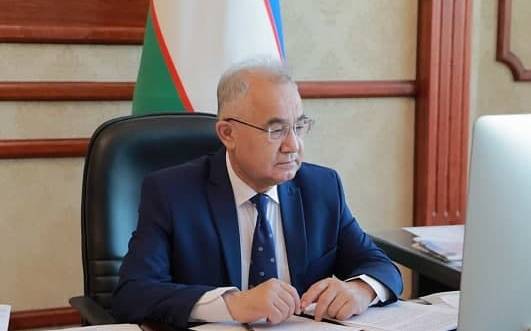
As Director of the National Human Rights Centre of Uzbekistan and a Member of Parliament, I see a clear responsibility here.
We must help people gain access to the knowledge and opportunities that can improve their lives.
Our educator Abdulla Avloni expressed the importance of this task:
“Education and upbringing are our most important concern: our happiness, our very life and destiny depend on them.”
The right to education gives this concern practical force. Freedom of thought, conscience and religion protects each person’s search for meaning. Cultural rights allow people to take part in their heritage. The right to benefit from scientific progress connects discovery with human well-being.
These rights belong to real people: a girl who wants to study science, a student who needs a library, a family seeking a better future.
This year, we mark the sixtieth anniversary of the adoption of the two International Human Rights Covenants. Their promise asks us to keep every person’s dignity at the centre of our work.
Alisher Navoi challenged us to care about the lives of others:
“Do not call a person human if they do not care about the fate of their people.”
I hear in those words a call to responsibility. We should carry people’s concerns into our institutions, our research and our decisions.
For this conference, that means thinking about who will benefit from the work we begin here.
We can study manuscripts together and translate more works. We can make digital collections easier to reach. We can give young researchers opportunities to learn from colleagues in other countries.
Each of these steps can bring an inherited idea to a new reader.
I wish this conference fruitful discussions and lasting partnerships. May the conversations begun here continue in universities, research centres and classrooms.
And as we celebrate the scholars of the past, let us think of the next reader—the young person who will open a book we have preserved and find a question worth pursuing.
That young person’s future is part of our responsibility today.
We have inherited knowledge that travelled across centuries. Let us give it a future in the lives of others.
Je souhaite plein succès aux travaux de notre conférence. Que notre héritage commun nous aide à rapprocher les peuples et à défendre la dignité de chacun.
Je vous remercie de votre attention.